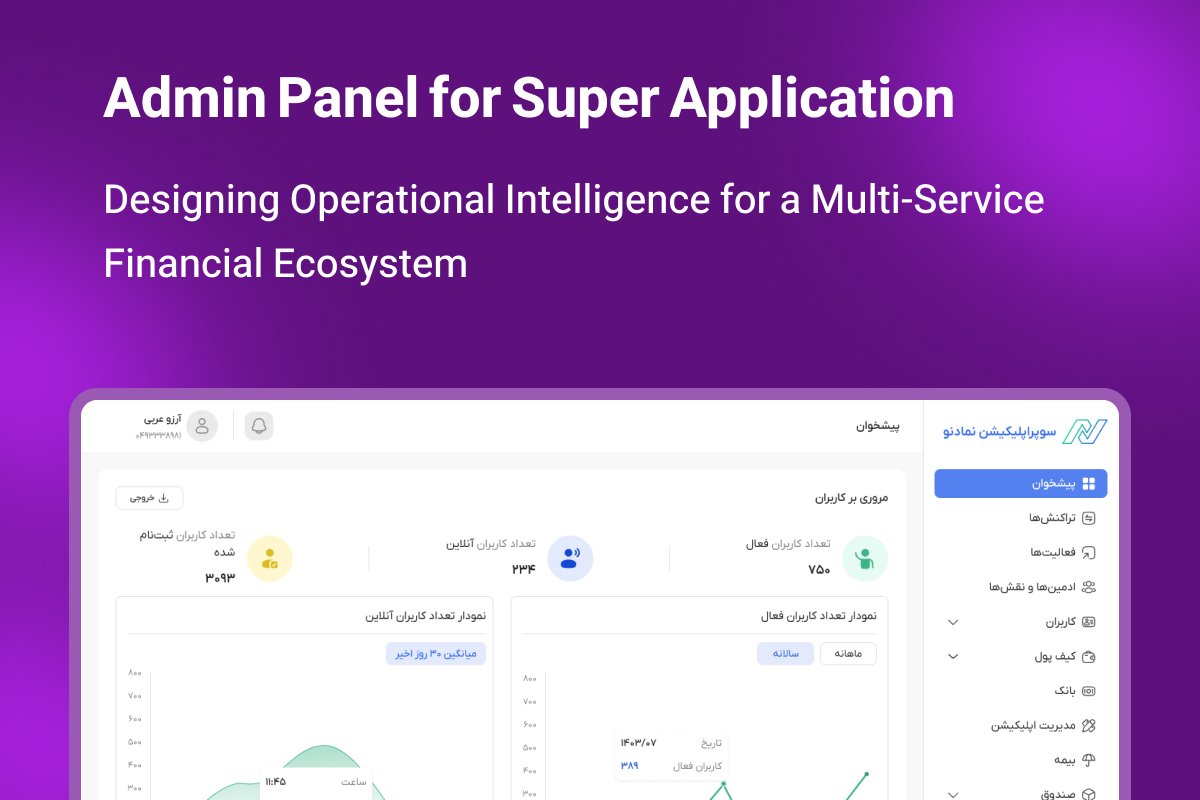
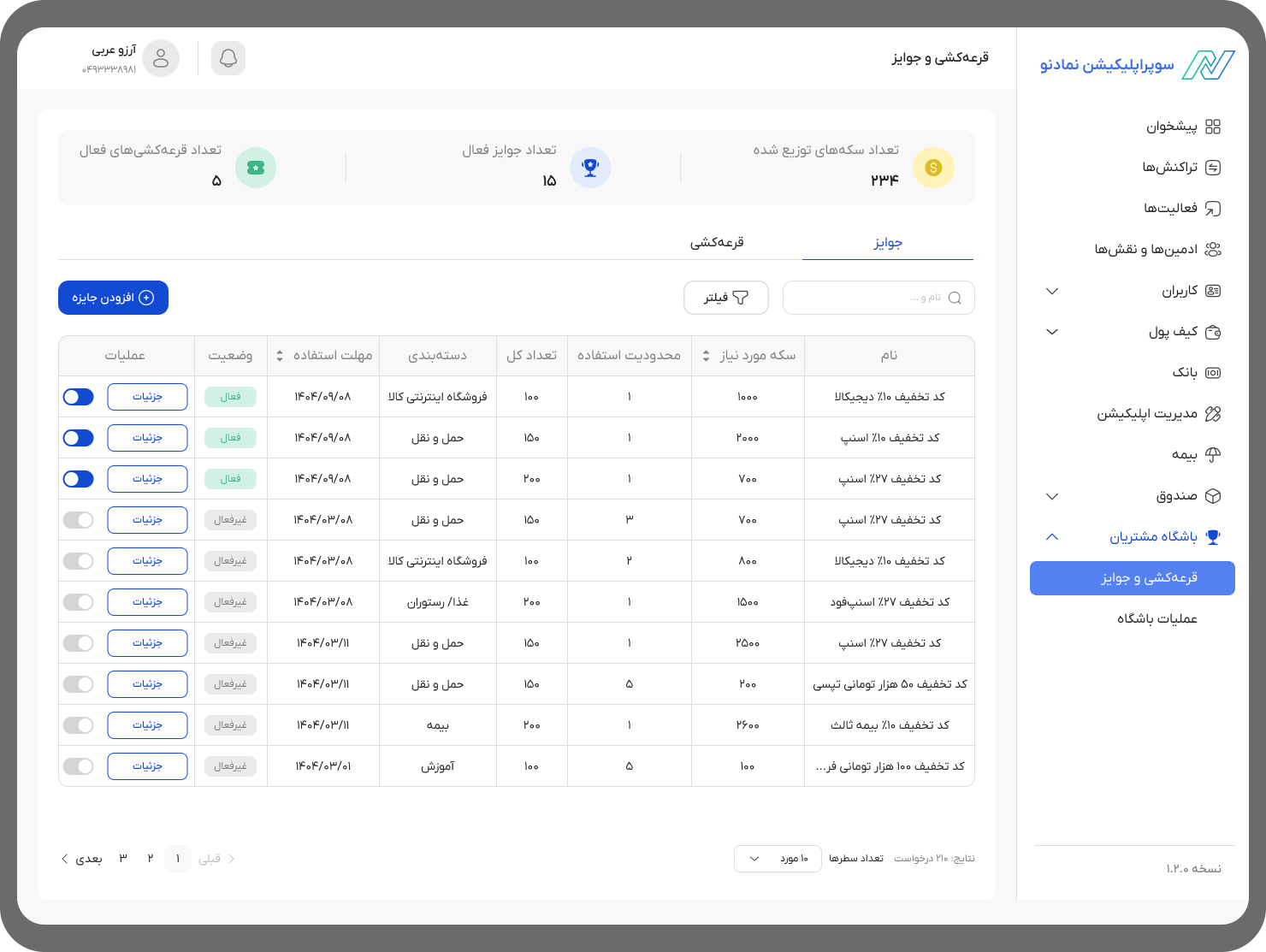
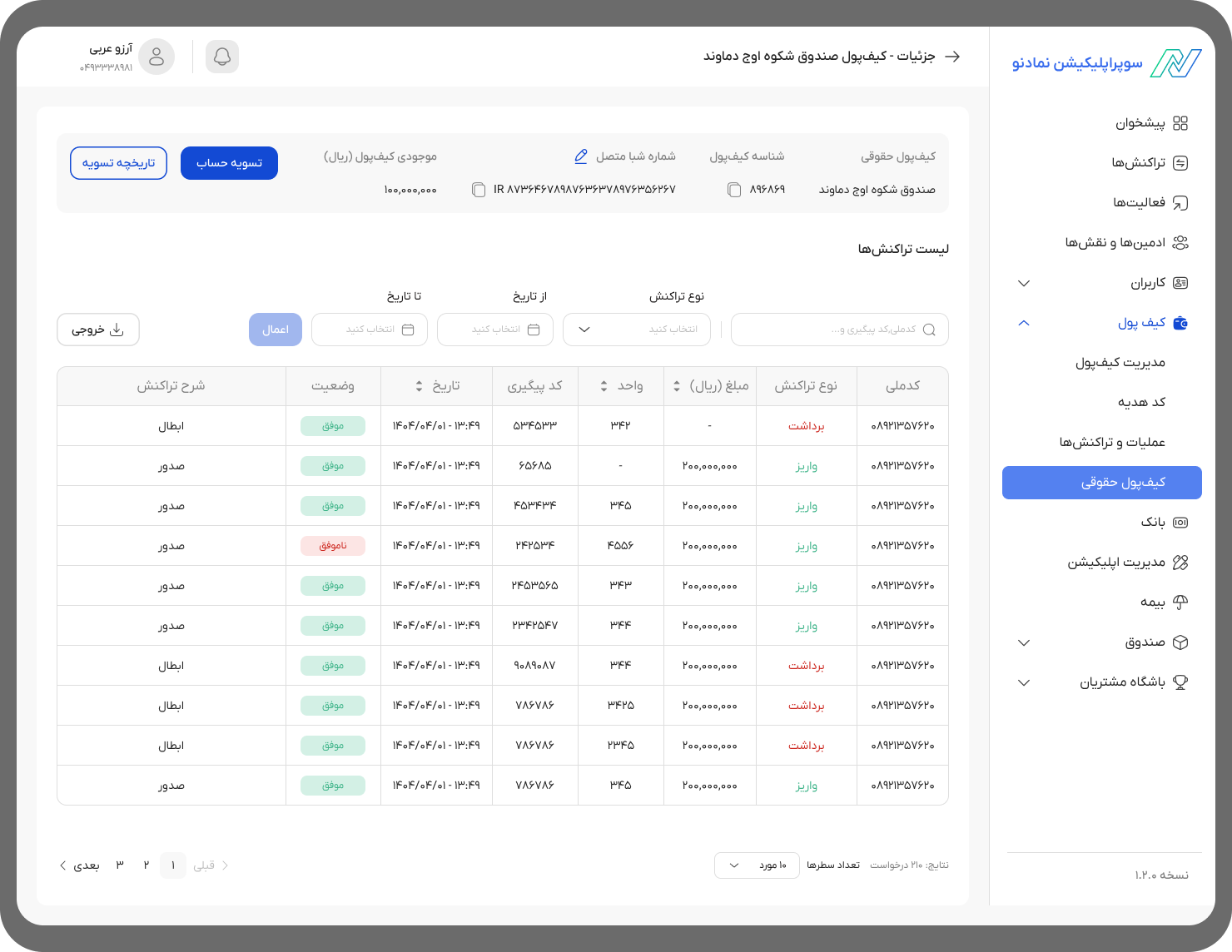
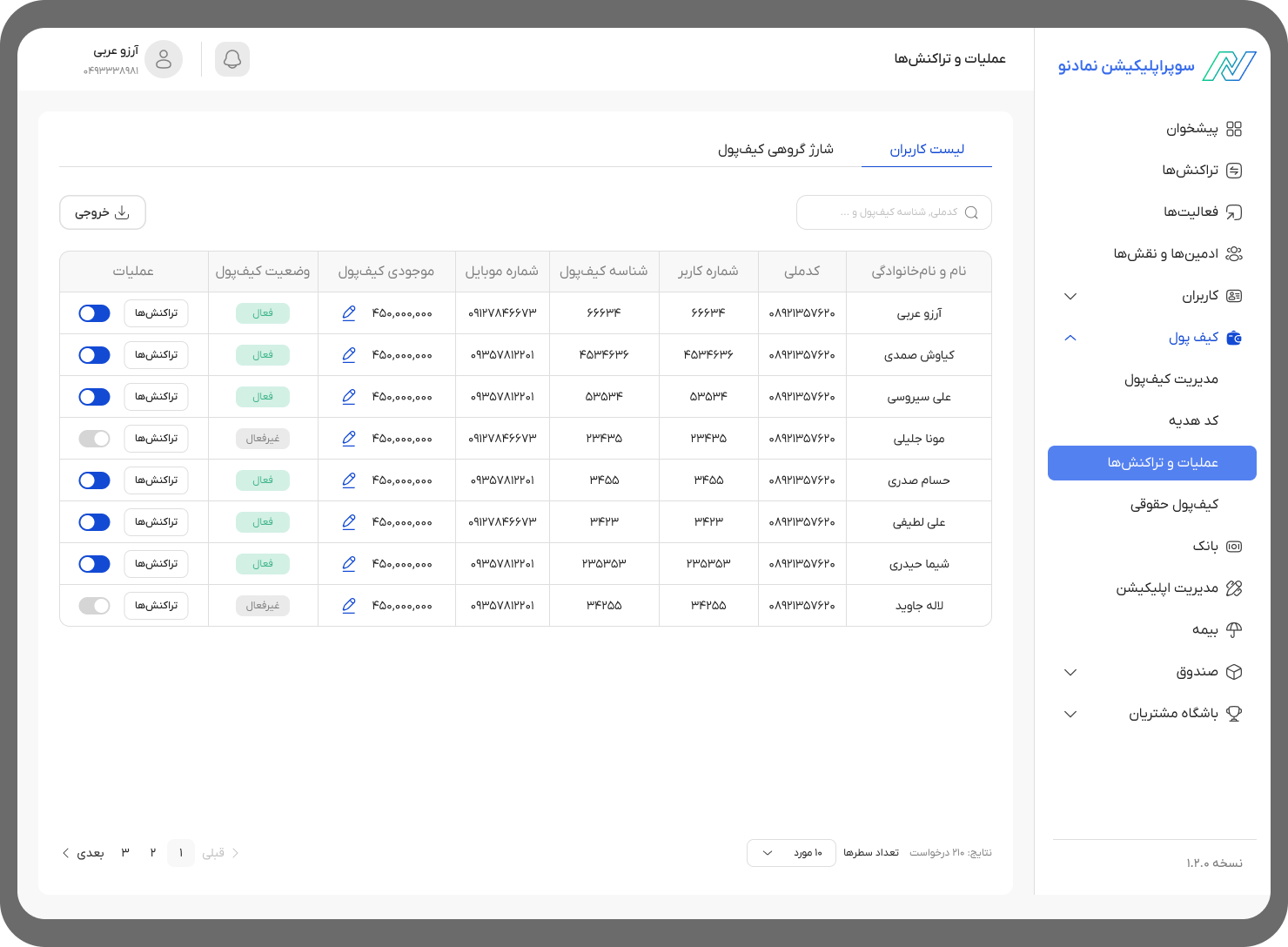
Super App Admin Dashboard Design for Namadno Financial
Designing a management and control system for a multi-service financial ecosystem
Product / Department: End-to-end back-office panel design for CRM teams and the Namadeno product
Platform: Admin Dashboard (Desktop)
Role: Product Designer (Full Ownership)
Project Overview
After the expansion of the financial super app Namadno, with the increase in services and user growth, the need for a comprehensive and structured back-office panel became an operational necessity. As a Product Designer, I was responsible for the end-to-end design of this dashboard for the CRM and Product teams. This project was carried out over a period of several months and included:
Complex information architecture
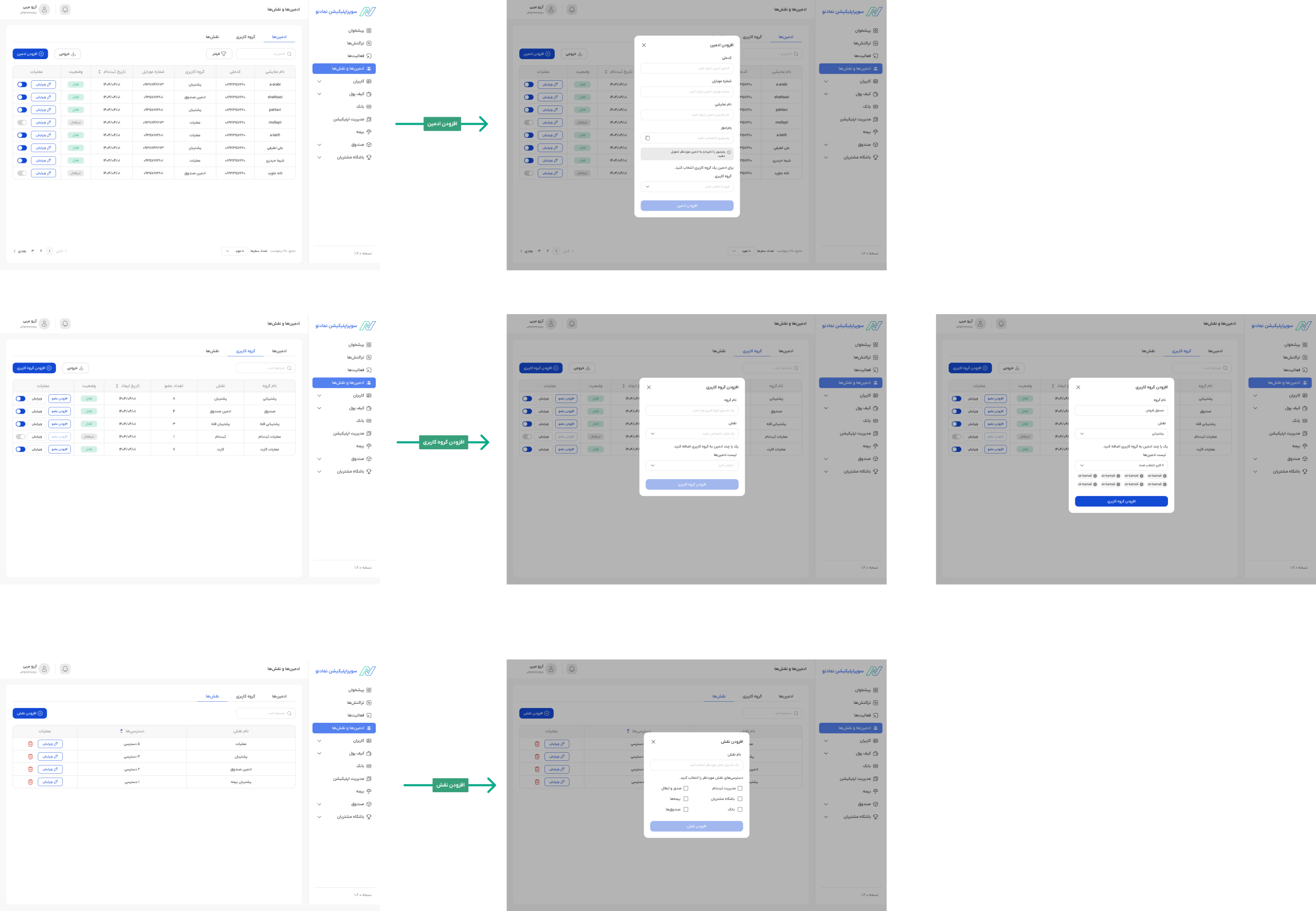
Defining the access model
Standardizing operational patterns
Designing the financial status system
And aligning the needs of multiple teams with different logics
This was not a UI project. This project was designing an “operational control system” for a multi-service financial ecosystem.
Context and Complexity
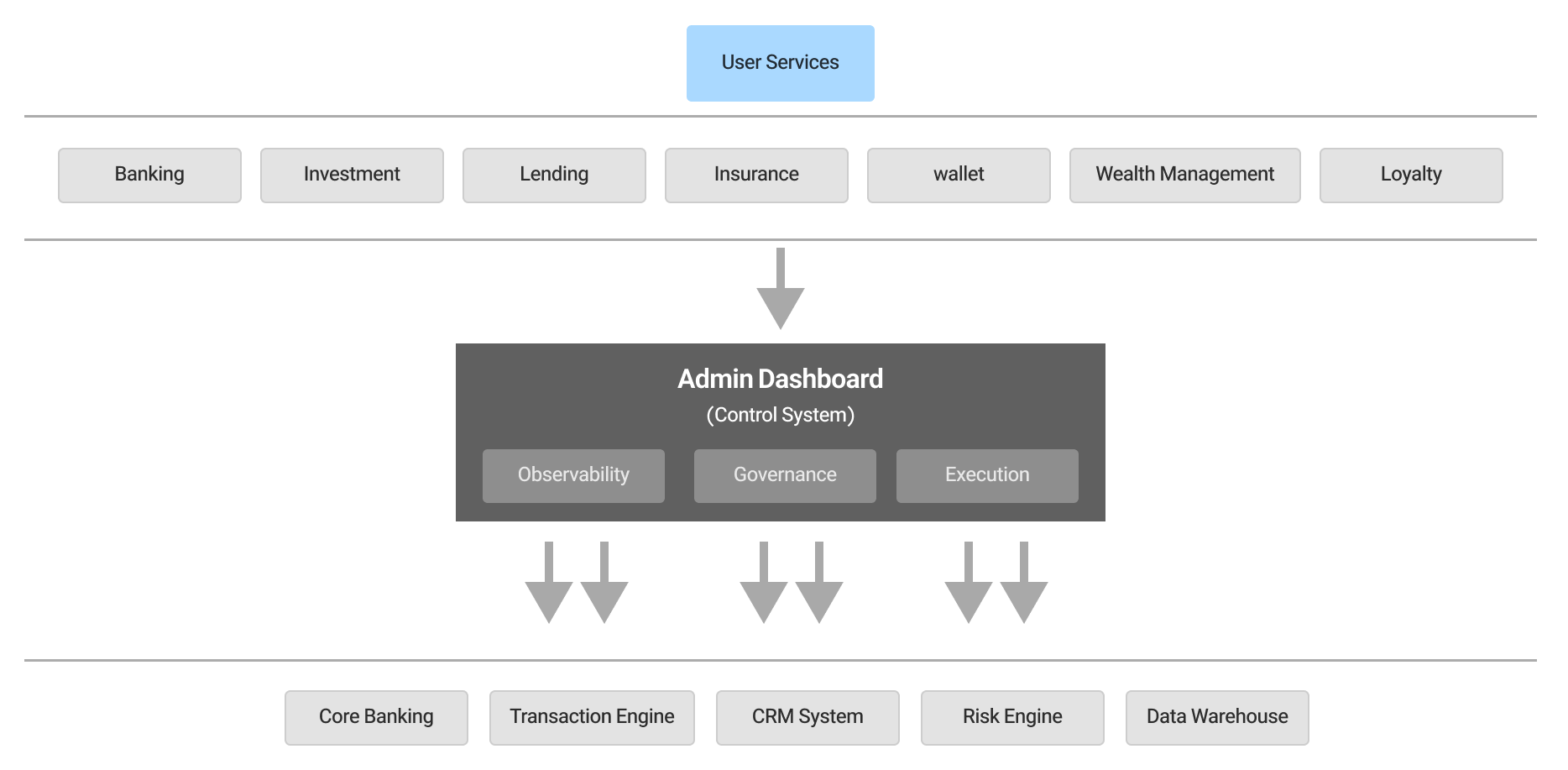
SuperApp included the following domains:
Banking
Credit
Investing
Insurance
Wallet
Customer Club
Education and Content
Wealth and Asset Management
Each has:
Independent financial logic
Different operating cycle
Specific system conditions
And different risk levels
At the same time, the panel had to respond to two teams with different mindsets:
CRM Team
Focus on solving the user’s immediate problem
Quick access to histories
Possibility of operational intervention
Product Team
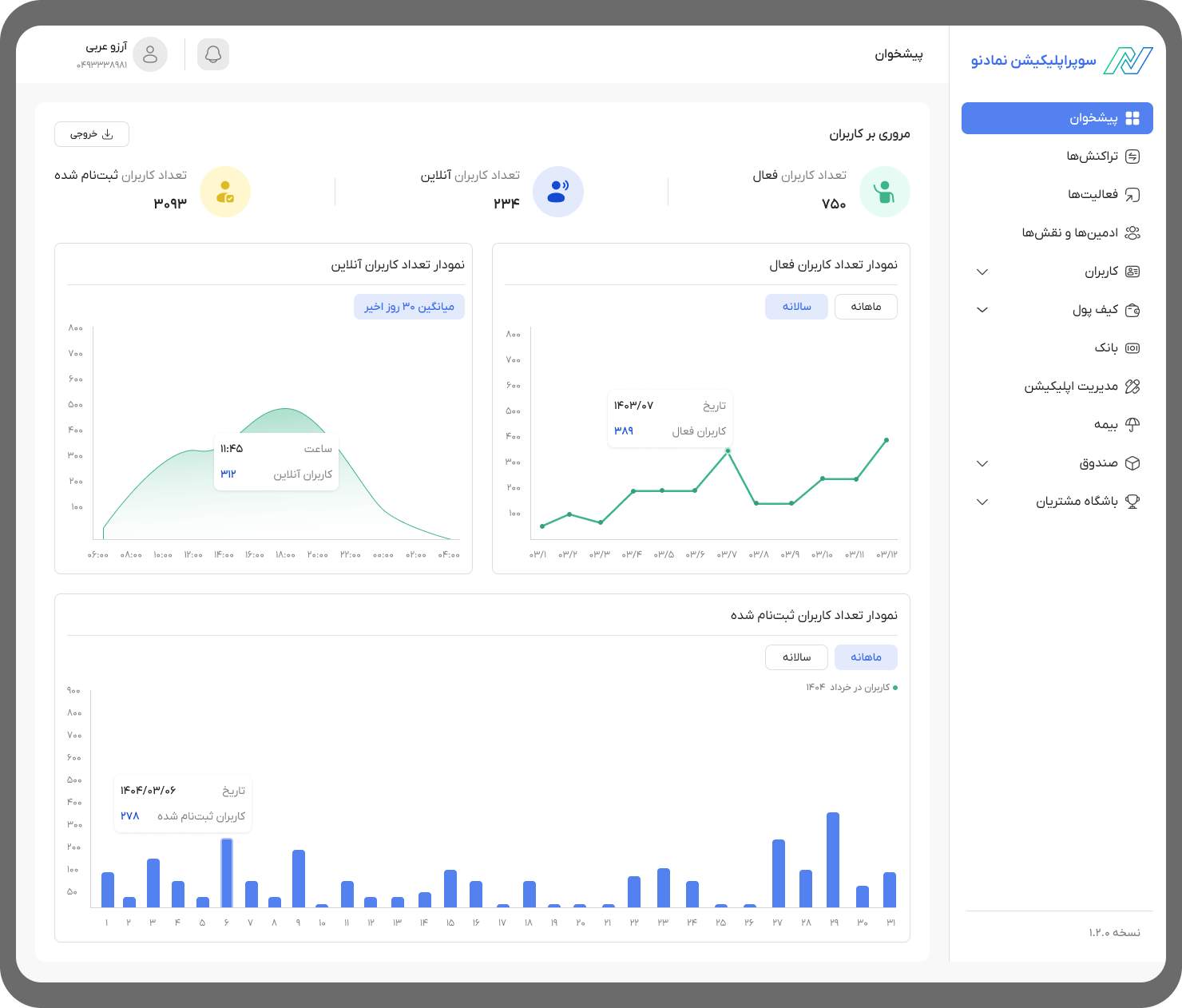
User Behavior Analysis
Performance Indicator Monitoring
Usage Patterns Analysis
Main challenge
How can a multi-domain system with high financial sensitivity be transformed into a structure that is both controllable and understandable?
Problem Framing
Initially, the panel was defined based on a list of services. However, this approach resulted in:
Scattered navigation
Hard to understand the overall system
Operator confusion between modules
The problem wasn’t just the variety of services; the problem was that each service had several different types of operations, status, and financial models.
The following areas also had financial and security risks:
Inventory management
External transaction review
User activity control
Roles and access management
At this point I decided to redefine the problem:
Instead of designing based on service, I should design based on “operational interaction type.”
Strategic Restructuring
I redesigned the information architecture in three layers:
Observability Layer
Dashboard, reports, user behavior, transactions Focus on the big picture and decision-making
Governance Layer
Role management, application management, wallet settings, capital management Focus on controlling the system structure
Execution Layer
All banking operations, investments, credit, insurance, users focus on direct action
Result:
Reduced cognitive complexity.
Specifieed the access level.
It clarified the operator's mental path.
Scalability made the future possible.
Role-based System Design
Given the financial nature of the system, accessibility design became a critical decision. From the beginning, I based the design on the following:
Role hierarchy
Permission granularity
Module-level restriction
Action-level validation
This was the most time-consuming part of the project because:
Each financial domain required a different level of access
Some operations had direct financial risk
Human error had to be prevented
Financial System Challenges
The financial management sector was the most complex, including the following challenges:
Multi-step transactions
Different statuses (Pending, Failed, Settled, Reversed…)
Interaction with external services
Banking error management
I decided:
Define a standard State System for all transactions
Design a timeline-based transaction view
Enable multi-step verification for high-risk transactions
Include log visibility as part of the design experience
These decisions transformed the panel from a demonstration tool into a reliable system.
Design Systemization
Due to the large number of modules (more than 20 operational modules), if each of them had an independent structure, the system would be extremely unstable. So I defined the following patterns:
Common Search Pattern
Status Display Pattern
Action Pattern
Logging Pattern
This standardization resulted in:
Reduce operator training time
Easier future development
Homogeneous work experience across the entire system
Time and Iteration
This project took several months and involved multiple iterations for the following reasons:
Multiple financial domains
Need to align with technical team
Review risk scenarios
Repeatedly redesign information architecture
A large portion of the time was spent on:
Redefining the structure
aligning with the product team
reviewing financial edge cases
and reviewing the access model
This project was not a quick design; it was a multi-stage analysis and redesign process.
Current status and impacts
The system is now implemented and fully connected to the CRM team.
Formal KPIs are being collected and will be measurable in the coming months.
However, structurally:
Established information architecture
Standardized access model
Manageable financial structure
The system is ready to develop new services
Key Learnings
Financial panel design is a “risk control” design, not just a page design
Security and accessibility must be built into the architecture from the beginning
The operator’s mental structure is different from the technical structure of the system