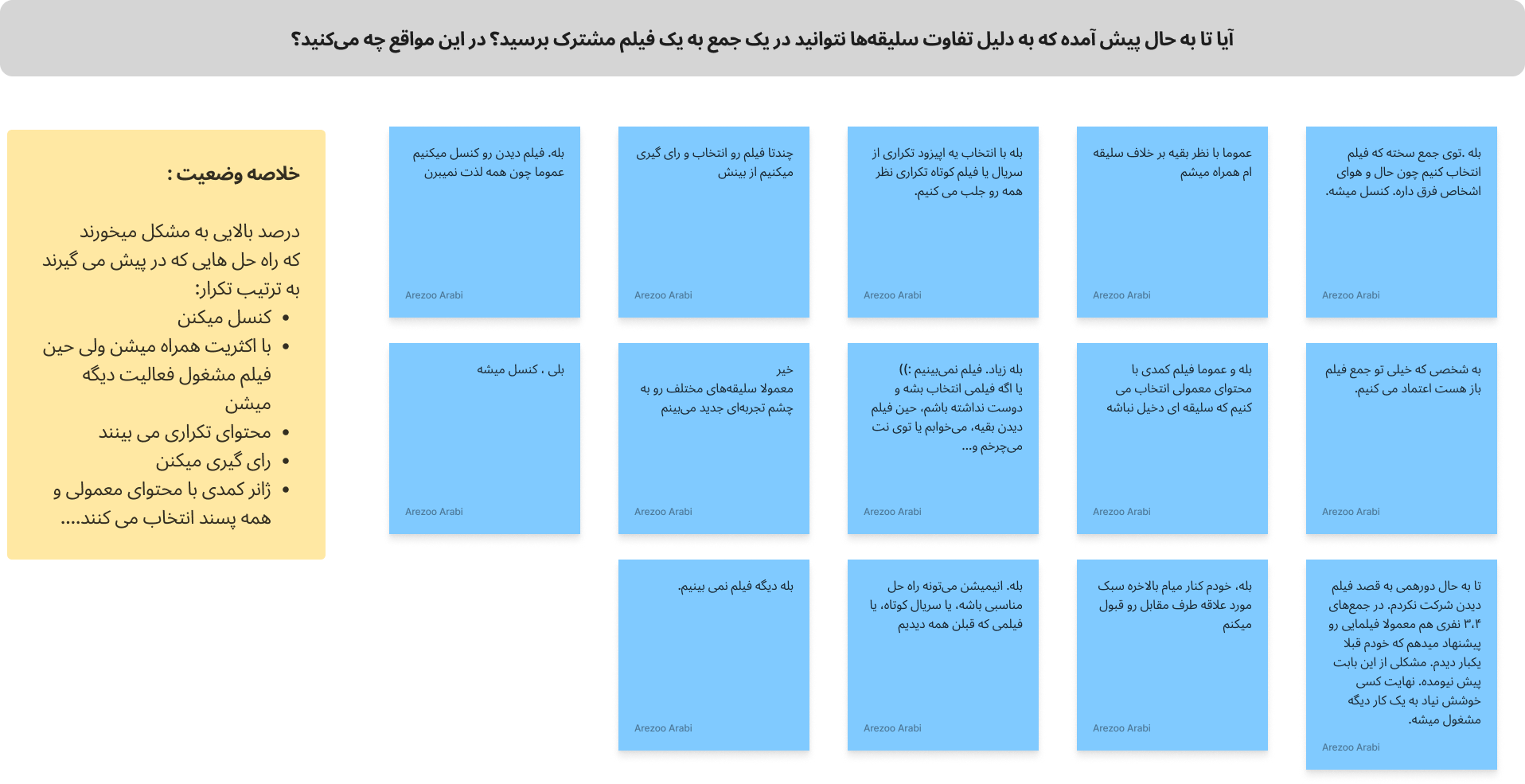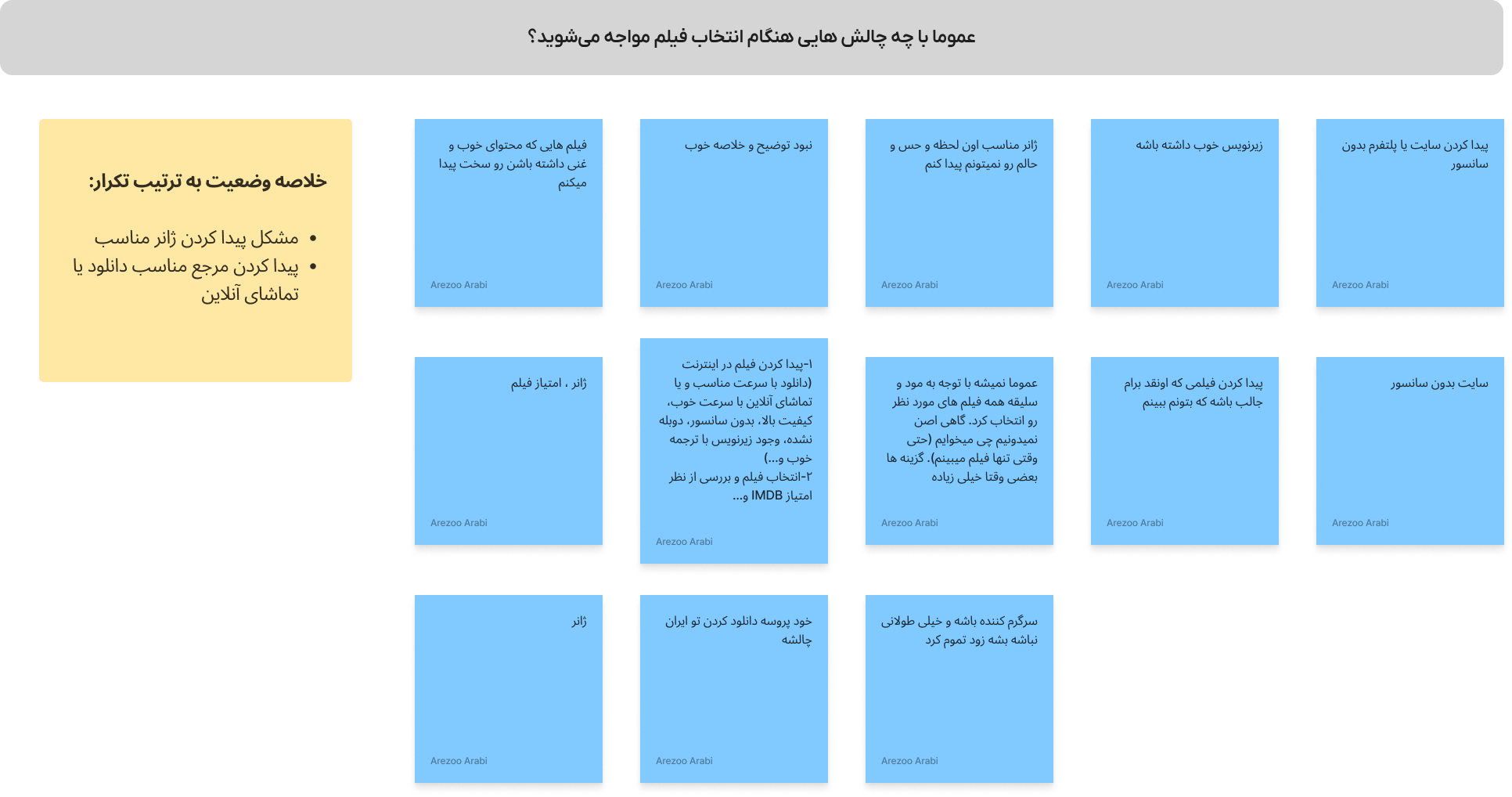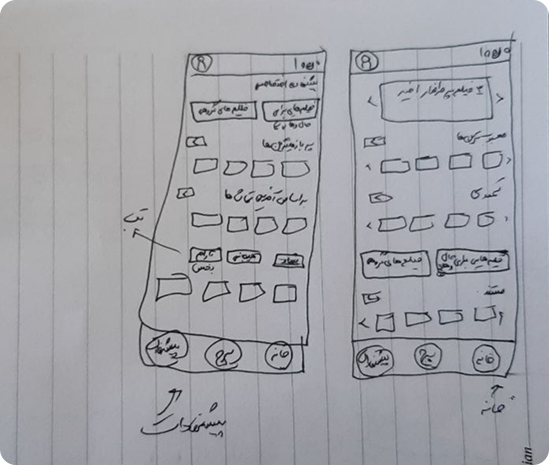
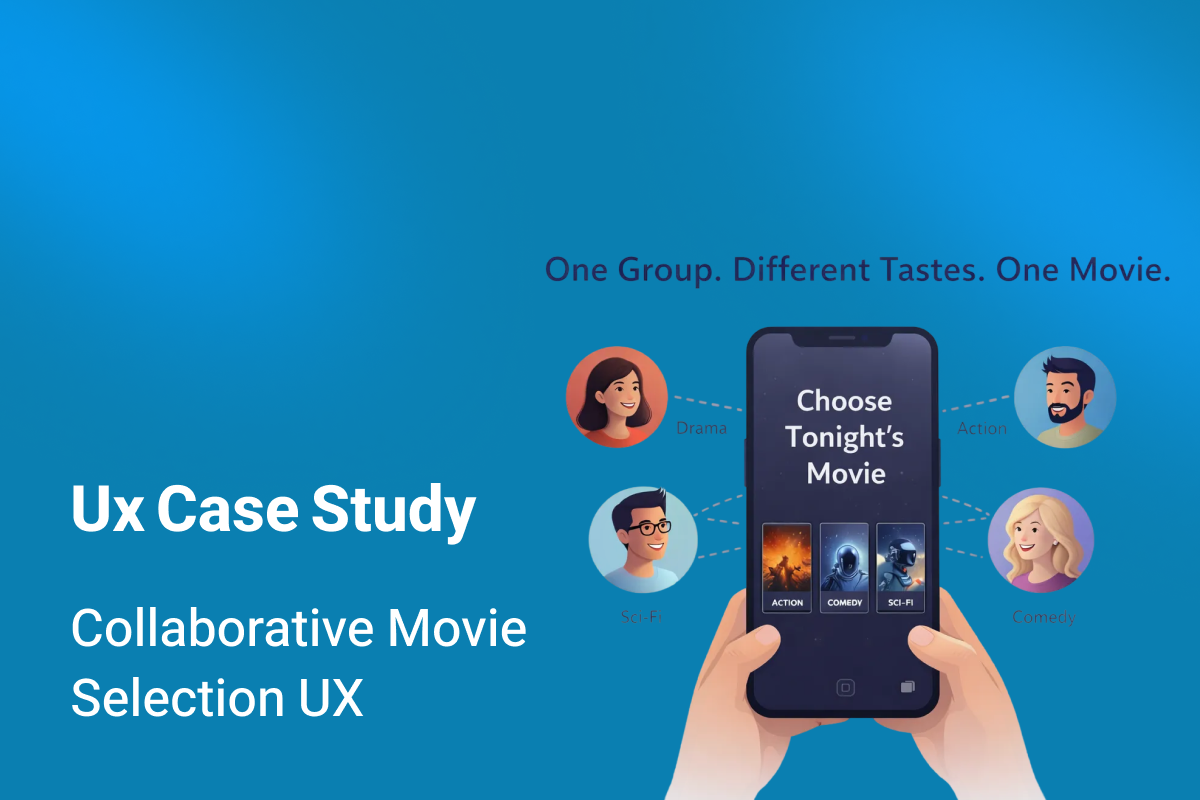
Choosing the right movie to watch in a family or group of friends with diverse and sometimes conflicting tastes has become a major challenge. This challenge is especially evident in groups where people have different preferences in genre, film style, and even entertainment level. Not agreeing on a movie can lead to dissatisfaction, wasted time, and sometimes exhaustion from the selection process.
The goal of solving this problem is to design or identify a tool that can:
Combine diverse tastes of individuals and provide group suggestions.
Optimize the movie selection process for groups and, with a simple and fast process, help groups reach an agreement without wasting time.
Create greater satisfaction for group members by providing suggestions tailored to the space and mood of the group.
Given the time constraints and the need to get accurate and direct information from users, I decided to use two main methods for research: questionnaire design and competitor analysis. These two methods helped me access important information more quickly and at the same time identify different user perspectives on the issue.
Reasons for choosing these methods:
1. Questionnaire: This method allowed me to ask questions directly to users and understand their perspectives, needs, and real challenges in choosing a movie.
2. Competitor analysis: Examining competitors helped me see the solutions that other platforms offered and their strengths and weaknesses. By analyzing competitors, I could understand what shortcomings there were in the existing solutions and what opportunities there were to provide a better solution in this area.
To obtain accurate data from users, I decided to design a comprehensive questionnaire that would answer key questions regarding the choice of movies to watch with friends or family.
Questions along with the reasons for the choice and the insights I expected to gain:
1. What challenges do you generally face when choosing films?
2. Have you ever been unable to find a common movie to watch in a group due to different tastes? What do you do in these situations?
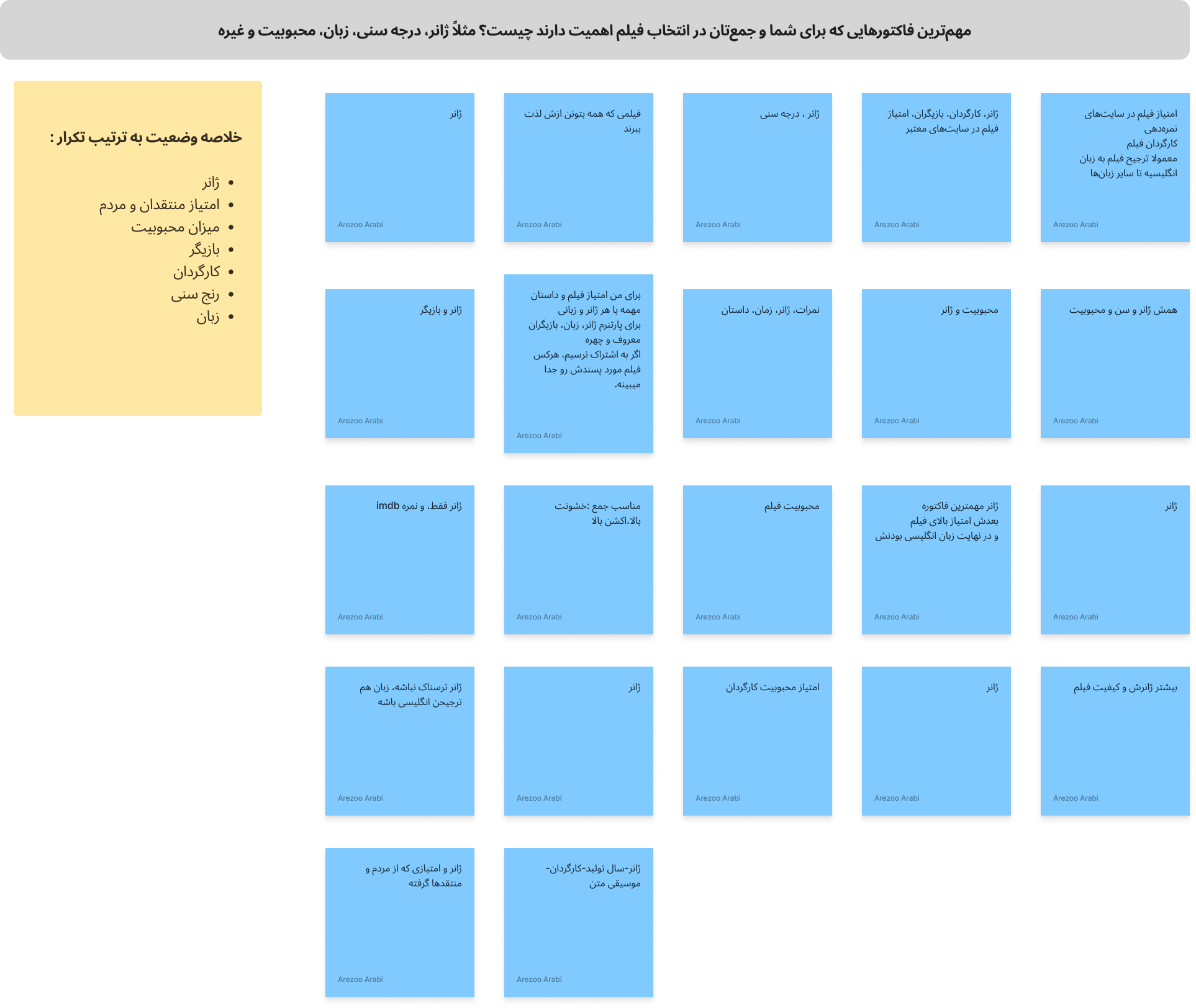
3. What are the most important factors that are important to you and your audience when choosing a movie? For example, genre, age rating, language, popularity, etc.
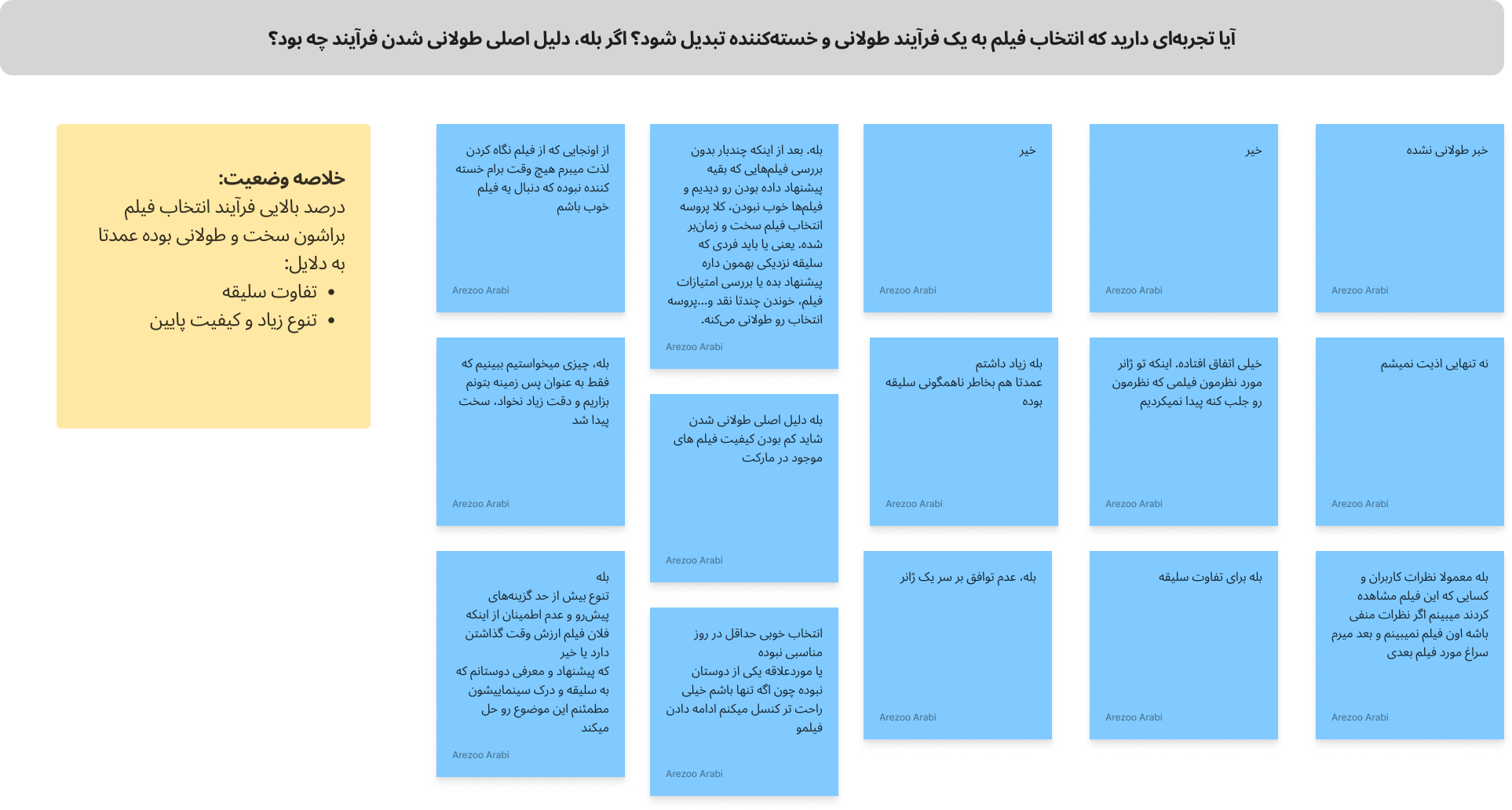
4. Have you ever had an experience where choosing a film turned into a long and tedious process? If so, what was the main reason for the lengthy process?
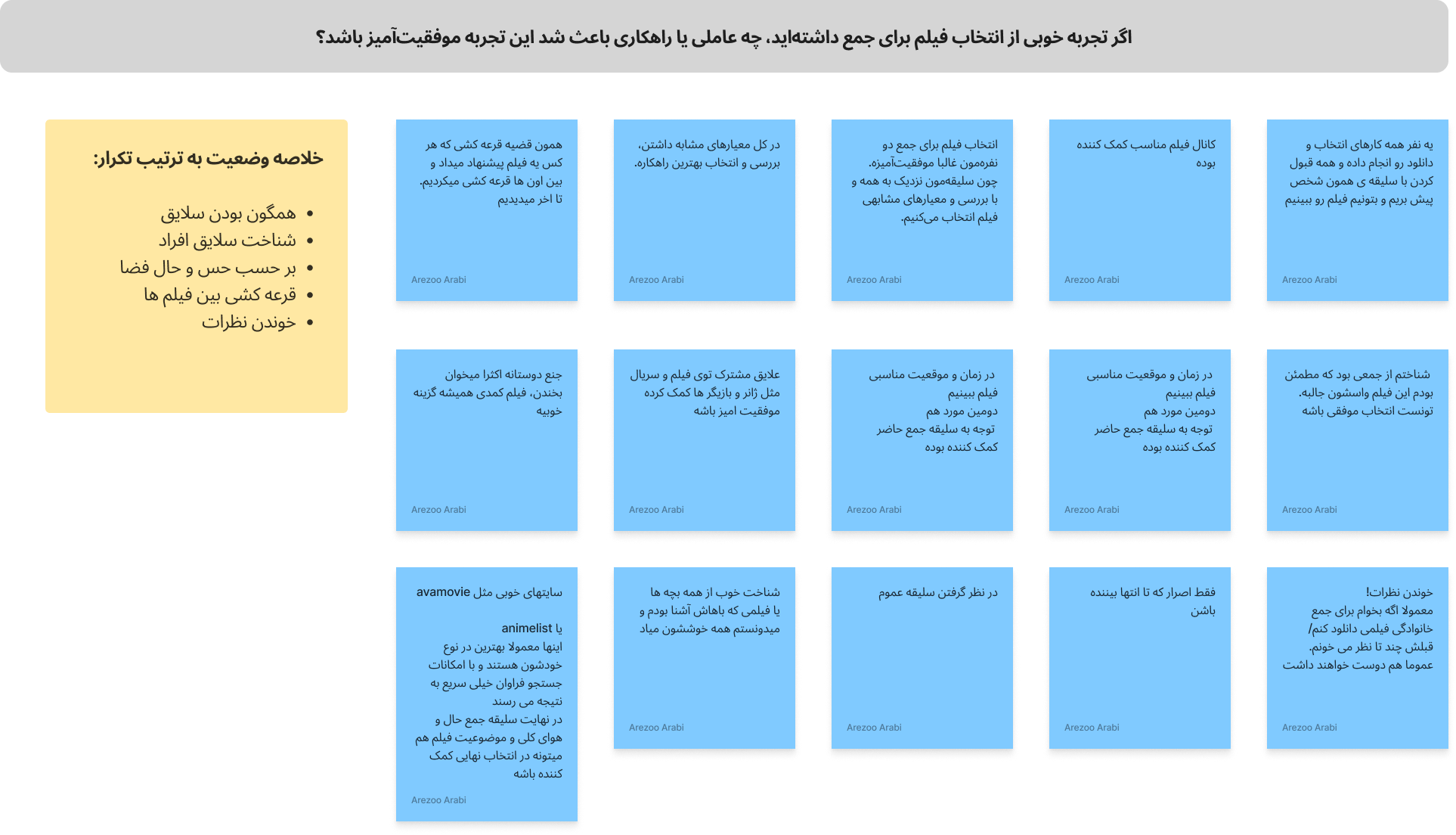
5. If you have had a good experience selecting a film for the group, what factor or strategy made this experience successful?
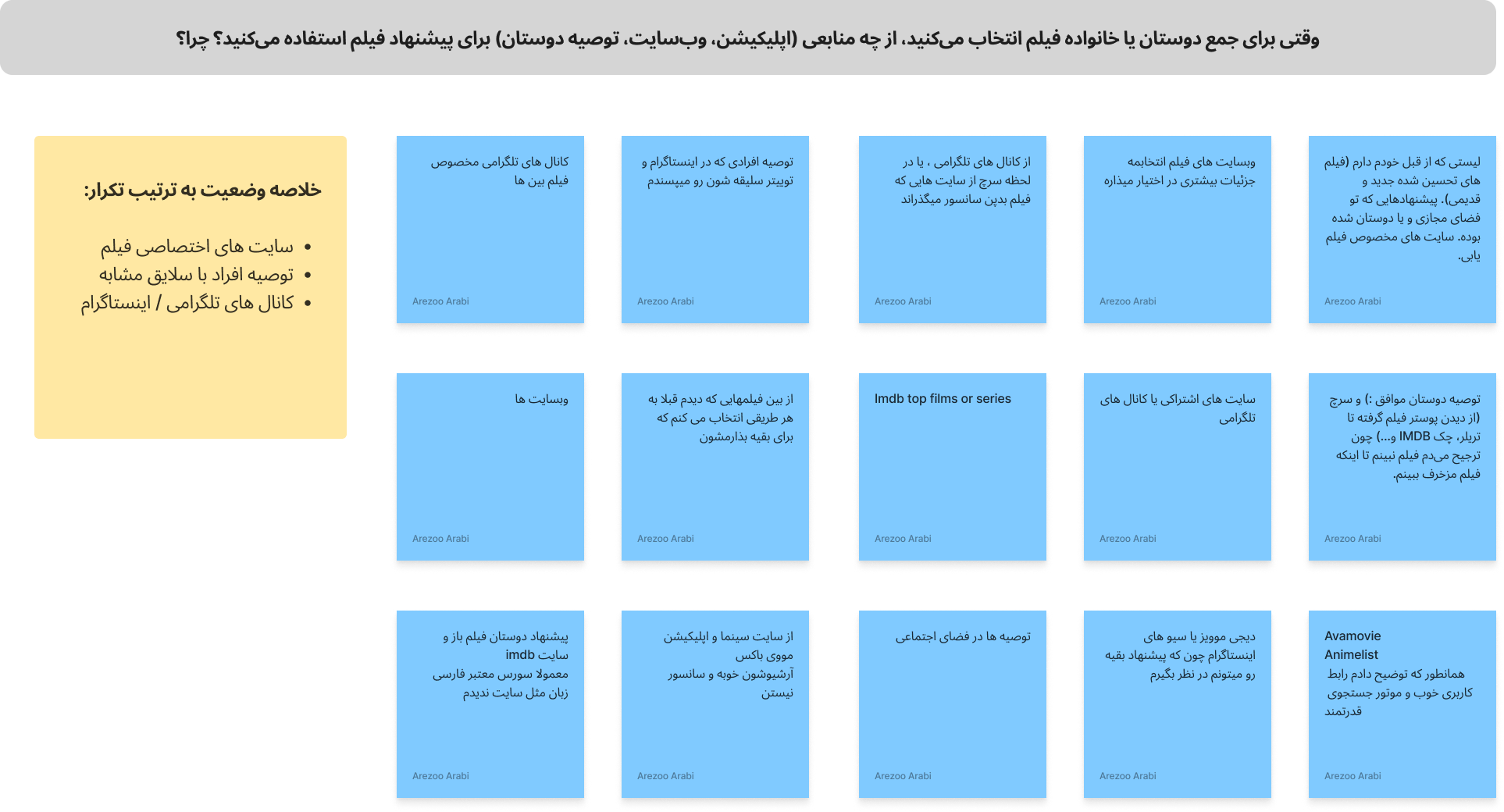
6. When choosing a movie for a group of friends or family, what sources (apps, websites, recommendations from friends) do you use to suggest movies? Why?
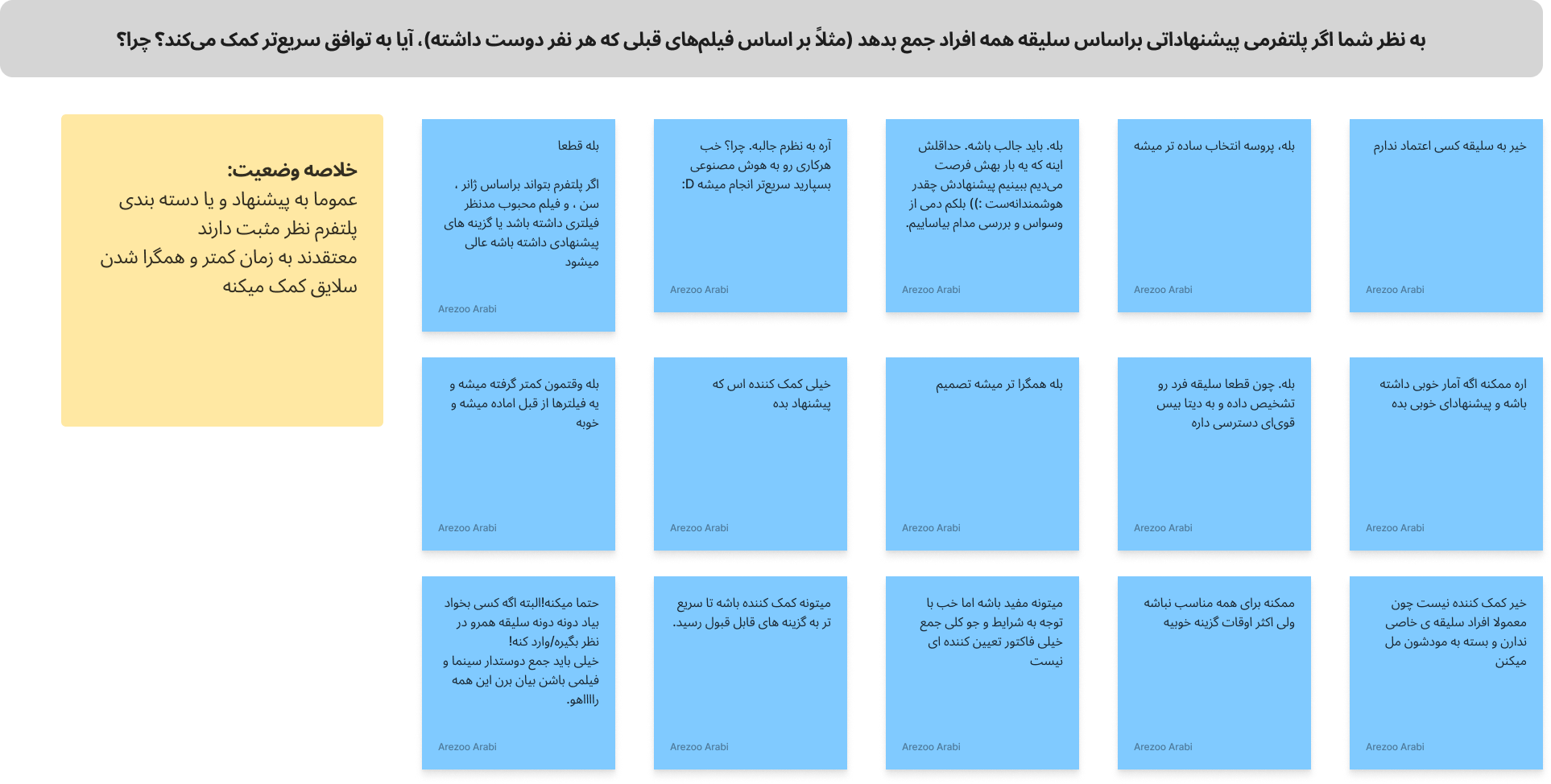
7. Do you think that if a platform made recommendations based on everyone's tastes (for example, based on previous movies that each person liked), would it help to reach an agreement faster? Why?
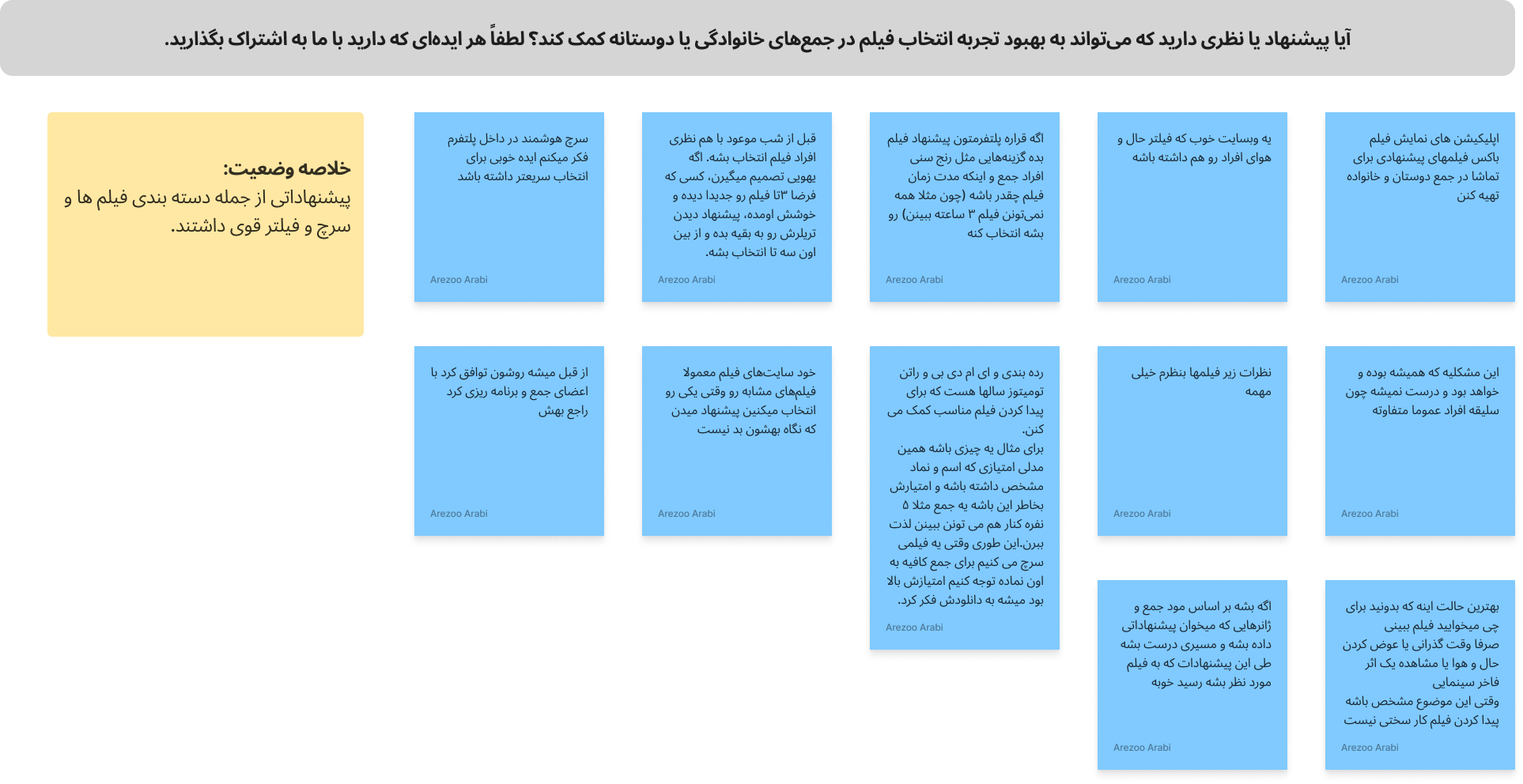
8. Do you have any suggestions or comments that could help improve the movie-watching experience for family or friends? Please share any ideas you have with us.
Insights gained: From these responses, we can come up with innovative suggestions for improving the user experience and new features. These insights can help us develop the system based on the real needs of users and their ideas.
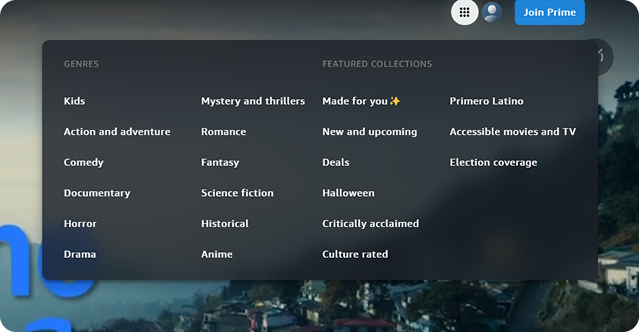
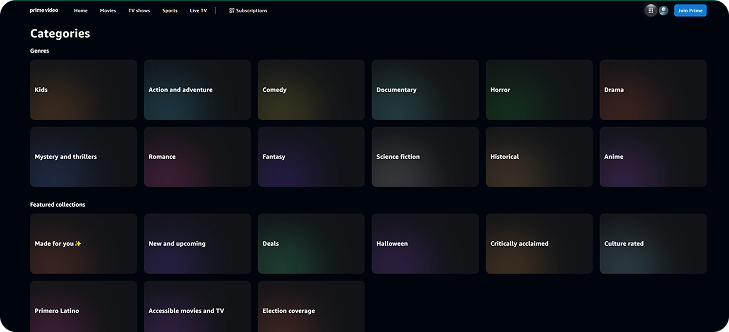
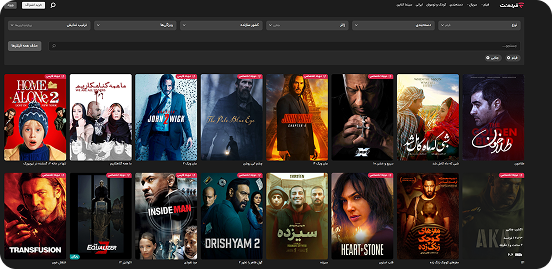
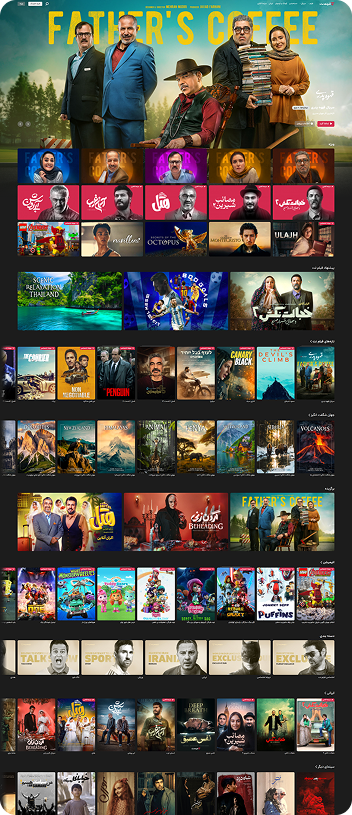
At this point, I looked at similar platforms and saw how they addressed the issue of movie selection for audiences with different tastes. I focused on platforms that used personalization and movie recommendation tools.
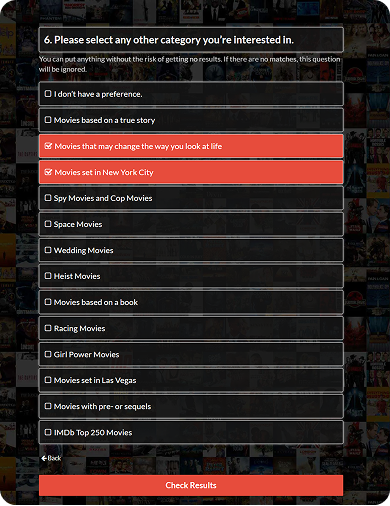
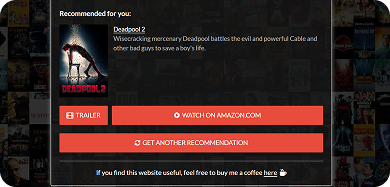
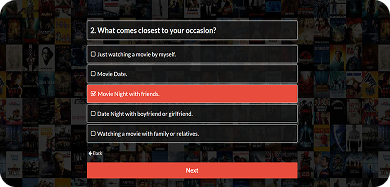
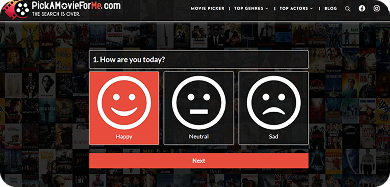
It is a useful and fast tool for selecting movies that focuses on the user’s mood and viewing situation, helping users find movies that suit their needs. This platform is very suitable for groups that need to make quick and efficient selections, although more features such as voting and direct interaction between group members for the final selection could have made it more complete.
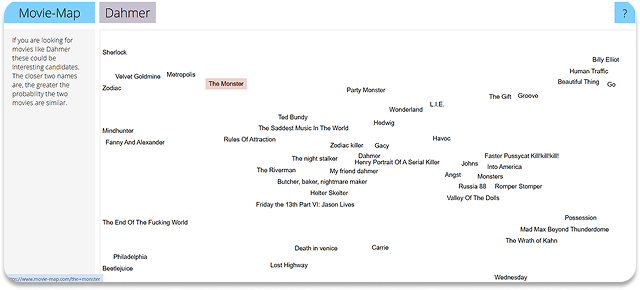
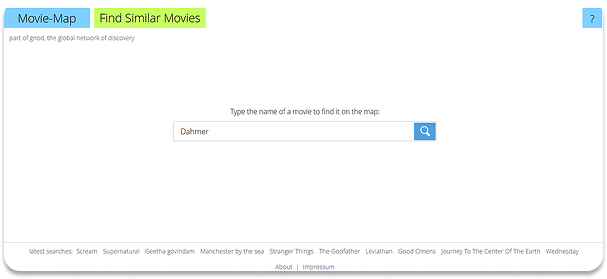
It is a suitable tool for finding similar movies and performs reasonably well in this regard, but it is not optimized to facilitate movie selection in groups with diverse tastes.
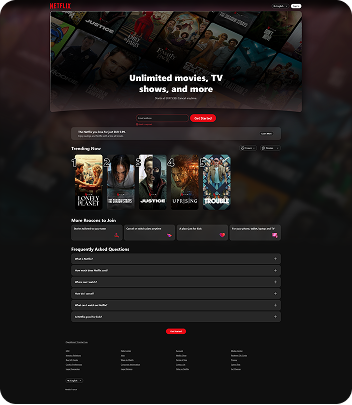
Netflix is a global online streaming service that offers a variety of movies, series, documentaries, and original content to its users. The platform uses artificial intelligence to provide personalized recommendations based on users’ tastes and viewing behavior, and has become one of the most popular streaming services worldwide.
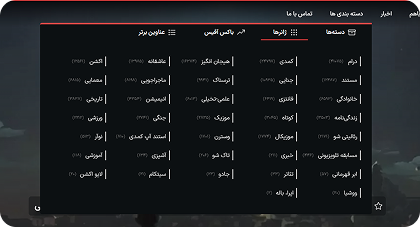
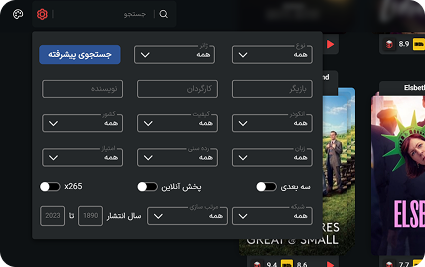
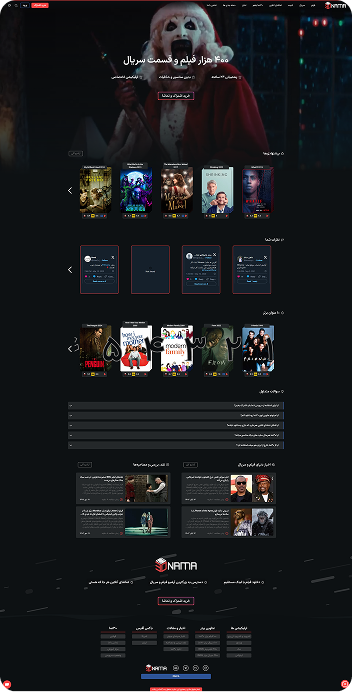
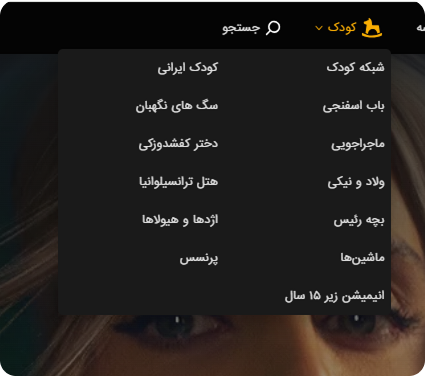
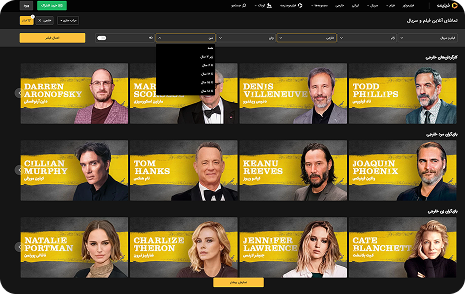
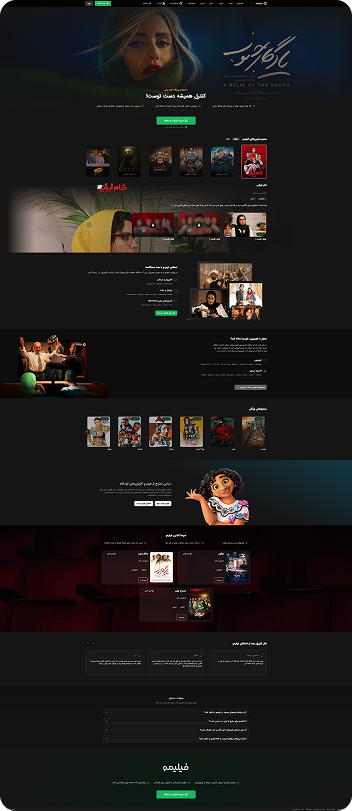
The 30Nama website does not offer a specific feature for selecting movies based on different tastes. The platform mostly helps users find the movie or series they are looking for based on individual filters such as genre, release year, and rating, but it lacks the ability to combine the diverse tastes of a group and provide recommendations suitable for everyone.
These research steps gave me a clearer perspective, and the information obtained from the questionnaire and competitor analysis helped me to better understand users and their needs, and to be able to create a persona from the limited data obtained.
To create these personas, I analyzed survey data focusing on users’ preferences in how they watch movies, their favorite genres, and the challenges and needs associated with choosing movies.
It should be noted that these personas are derived from questionnaire data and do not accurately and completely represent any specific individual, in fact, they can be relied upon in the early design phases. In general and in summary, I went through these steps:
Identify demographic characteristics: Analyze data such as age and viewing type (alone, family, friends)
Analyze preferences and challenges: Examine viewing preferences and movie selection challenges for each group
Extract needs and motivations: Identify popular genres and motivations for each group
Create hypothetical profiles: Combine data and create personas that represent users’ needs and challenges

Watching with Family
Age and family content filters: for suggestions suitable for family members of different ages
Group participation tools: such as surveys to aid collective decision-making

Watching with Friends
Entertaining and exciting content: Emphasis on comedy and action films
Quick agreement tools: like voting and group suggestions for friendly gatherings

Individual Watching and specific content
Special content categories: Suggesting arthouse and lesser-known films
Genre and style filters: for quick access to in-depth and diverse content
In the overall results of the questionnaire and the insights I gained, users are divided into two main groups:
This group, whether alone or in a group, often hesitates to make decisions about movies and does not have clear options.
These users need accurate and diverse recommendations based on their general tastes and personal preferences. Tools such as recommended movie lists and various filters can help them make choices.
This group often faces challenges due to differences in taste when watching movies with friends or family.
These users need collaborative tools such as voting and mixed recommendations to make it easier for them to choose the movie that best suits their tastes. Solutions that manage these differences in taste help these users reach an agreement more quickly.
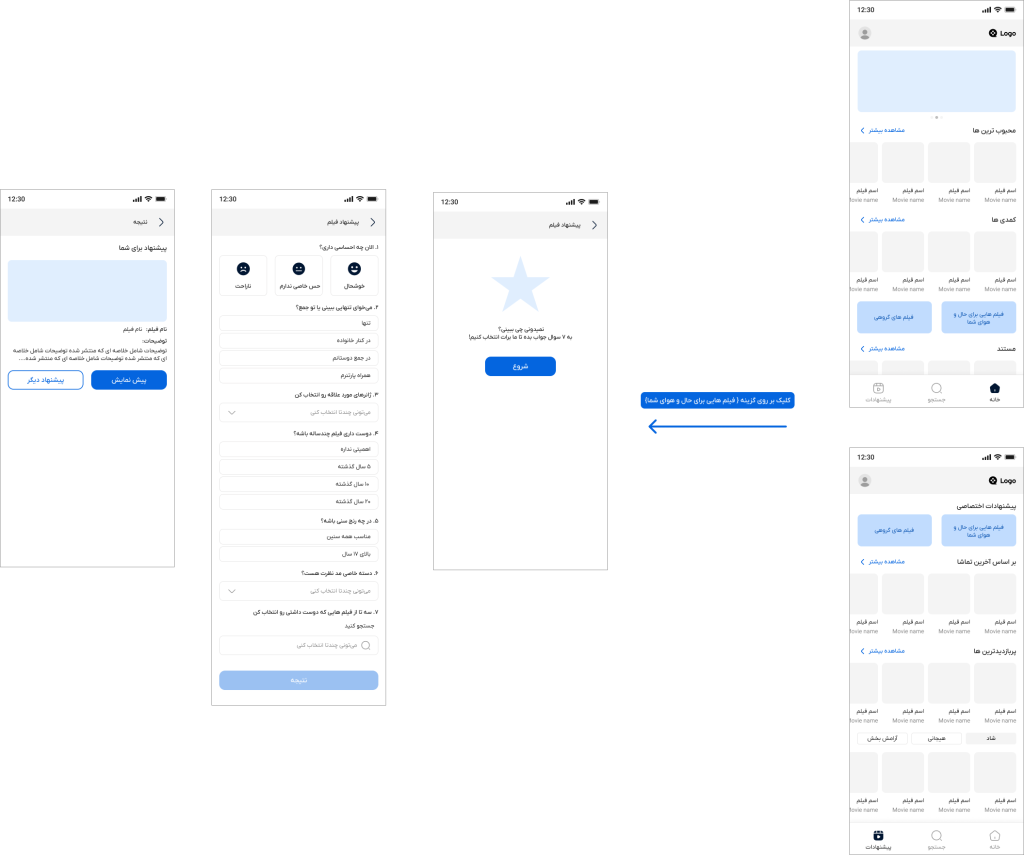
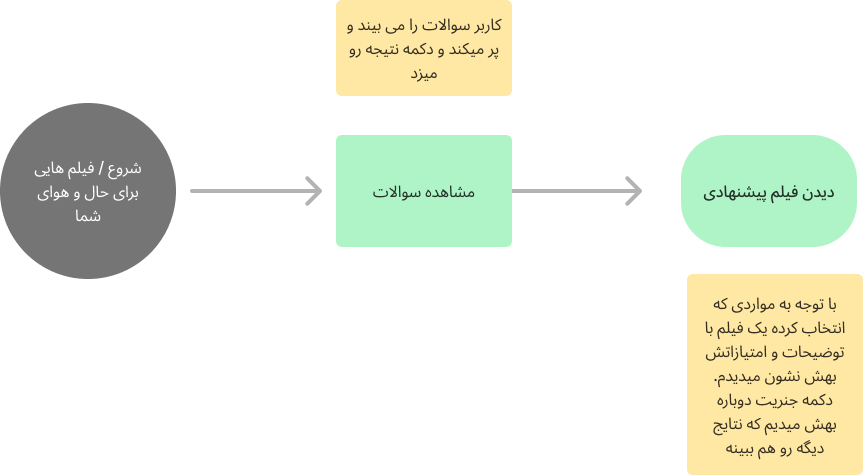
This feature combines the capabilities of PickAMovie and Movie-Map, allowing users to access intelligent movie recommendations based on personal or group preferences, as well as discover similar and related movies.
Using information such as mood, favorite genres, type and age mix of the group, and similar movie suggestions, this feature provides a personalized experience that matches the atmosphere of each group, helping users choose the right movie faster and with greater agreement.
1. Accurate and personalized recommendations: easier movie selection and tailored to the group’s needs
2. Reduced decision time: faster selection and reduced disagreement in groups
3. Discover new and relevant movies: access to diverse and attractive options
4. Increased user engagement: a dynamic and engaging experience for users
1. Complexity in design: Requires intelligent and time-consuming algorithms.
2. Dependence on accurate data: Requires sufficient information from users for successful recommendations.
3. Higher resource consumption: Processing multiple variables can require high resources.
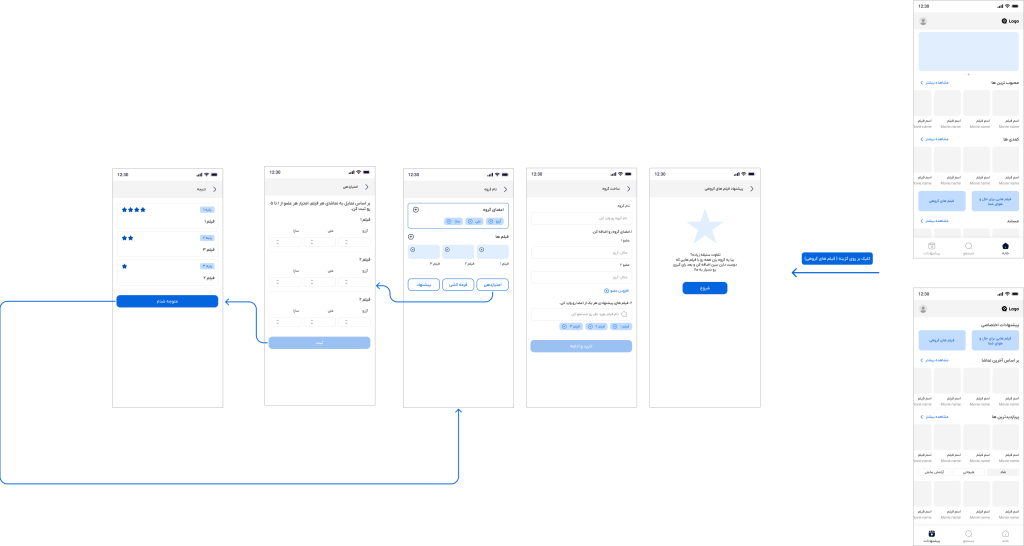
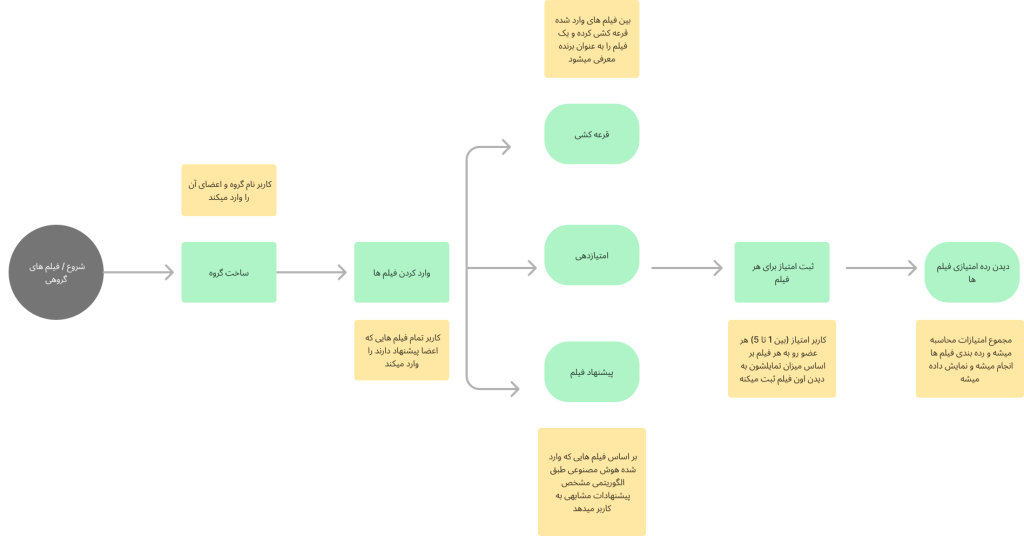
This feature allows a user in a multi-person group to enter the names of the people in the group, making the group video selection process simpler and more structured.
Add group members: The user can add group members by name to the number of people present; for example: the first member is “Arzoo”, the second member is “Ali”, and …
Enter movie suggestions from each member: Each member can submit several movie suggestions that the main user enters into the list.
Rate movies: Each group member can give a personal score to each available movie. The system automatically calculates the average score for each movie.
Three final options for making a decision:
Decision based on score: By selecting this option, the movie that has the highest average score from all members is selected as the selected movie.
Random draw: An option to randomly select a movie from the suggested options, if the group members cannot reach an agreement.
Suggest similar movies: The system automatically offers movies similar to the entered movie suggestions that are interesting and attractive to the group.
1. Structured and democratic choice: Ratings and averaging allow group members to choose the desired movie without disagreement.
2. Diverse decision-making options: The ability to make decisions based on ratings, lottery, or similar movie suggestions gives users flexibility.
3. Interaction and fun: The group process with ratings and diverse choices creates an engaging and interactive experience.
1. Complexity of use for large groups: It may be a bit time-consuming and complicated to enter suggestions and ratings for a large number of people.
2. Requires access and management by one person: Only one person can enter suggestions and ratings, which may make management more difficult for the group.
3. Requires more processing for similar suggestions: Suggesting similar movies requires more resources and algorithms, which may be challenging.
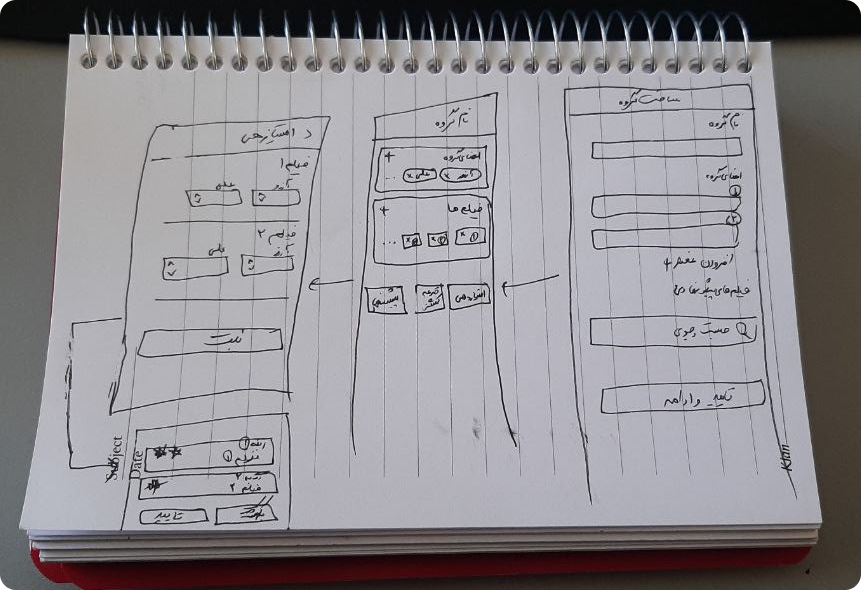
Key designed features:
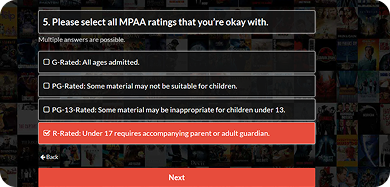
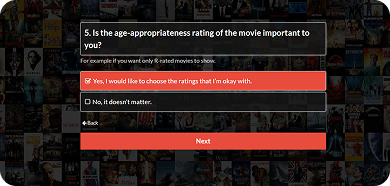
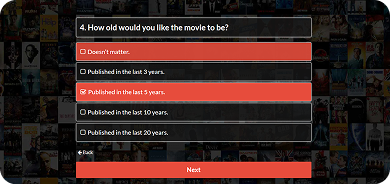
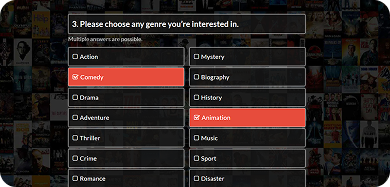
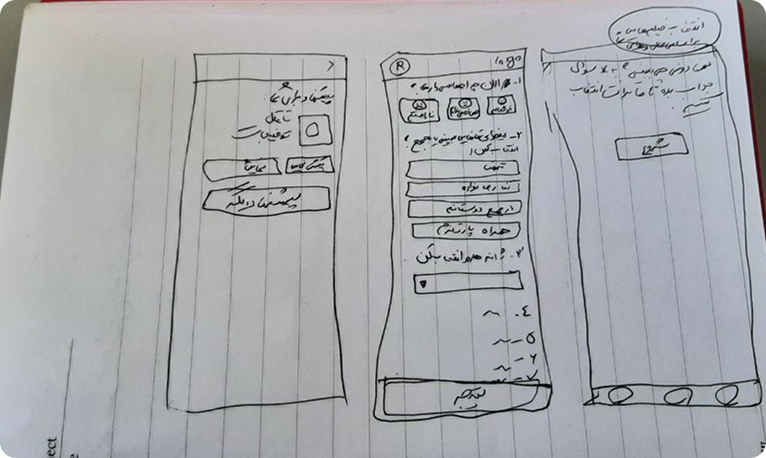
This feature allows users to find movies that suit their mood and make better choices with a few short questions.
Users can enter suggested movies, rate them, and arrive at a consensus selection by averaging or drawing lots.
This metric shows how engaging the suggestion feature is for users and whether users are willing to use it to find suitable movies.
It shows how well this feature has been able to meet the needs of audiences and help them choose movies.
The shorter this time, the easier it is to use the platform and the more satisfied users are with the features.
Percentage of users who return to features after using them once.
This metric shows whether the features were actually useful and whether users are willing to use them again.
User satisfaction with the movie selection and recommendation experience, with a quick survey after the process is complete.
A direct metric to measure the effectiveness and user satisfaction with the overall experience.